
Makhana from the
ponds of Bihar.
Not a factory product. Not sourced from an exchange. Our makhana comes from the same wetland district where the Mallah community has been harvesting it — by hand, by dive — for as long as anyone can remember.
What makes makhana different?
Most people come for the crunch. They stay because of what makhana actually is.
Grown in ponds, not farms
Makhana (Euryale ferox) grows in stagnant freshwater wetlands 4 to 6 feet deep. The plant cannot be farmed on land. There are no machines for harvesting — only the Mallah community, who have been diving these muddy ponds for generations, collecting seeds by hand.
Roasted, never fried
Every batch is dry-roasted in a large iron pan (lohay ki kadhai). At the right moment — judged by sound, smell, and feel — a wooden mallet called Thaapee is struck against the hot seed. The shell bursts open to reveal the white, crispy kernel inside. No oil. No shortcut.
GI-tagged — April 2022
Mithila Makhana received its Geographical Indication tag from the Government of India in April 2022. Only makhana grown in the designated North Bihar districts can legally carry this name. Bihar produces 85–90% of the world's entire makhana supply.
No MSG, no artificial colour
Our flavouring uses real spice blends and cheese powders. No monosodium glutamate, no artificial colourants, no hydrogenated fats. If you've been reading ingredient labels on other brands, you'll notice the difference immediately.
The process no other brand talks about
The brands that sell makhana in Bangalore and Mumbai mostly buy it graded and processed from wholesalers. We are the wholesaler's source. Here is what actually happens before any bag of makhana is sealed.
Between October and January, farmers prepare the ponds — clearing weeds, broadcasting seeds by hand into chest-deep water. By July, the crop is ready. Harvesting days begin before dawn.
Fixed in the centre of the pond as an anchor point. Divers work in a radius around it, feeling for seed pods on the mud floor.
A crescent-shaped bamboo basket that floats at the surface. Seeds dragged up by hand are swished in water here to wash off mud before being transferred to shore.
Used to strike the roasted seed against a wooden block called the Apharaa. The impact pops the shell open at exactly the right moment — too early or too late and the kernel is ruined.
The wooden block against which the Thaapee strikes. This manual technique has not been replaced by machines — the sound and feel of readiness cannot yet be replicated by automation.
Not all snacks are the same
Per 30g serving — a typical single-sitting portion.
Roasted Makhana
Potato Chips
What's inside our makhana
~104 kcal
Calories
per 30g serving
~3g
Protein
complete amino acids
<1g
Fat
vs. 9–10g in chips
~65mg
Magnesium
per 30g serving
~150mg
Potassium
per 30g serving
<10mg
Sodium
naturally low in salt
Values are approximate and based on plain roasted makhana. Flavoured variants will vary slightly due to seasoning. Full nutritional info is printed on each packet.
Pick your flavour
Five distinct seasoning profiles. All on the same great makhana. All roasted in-house at our Vaishali processing unit.
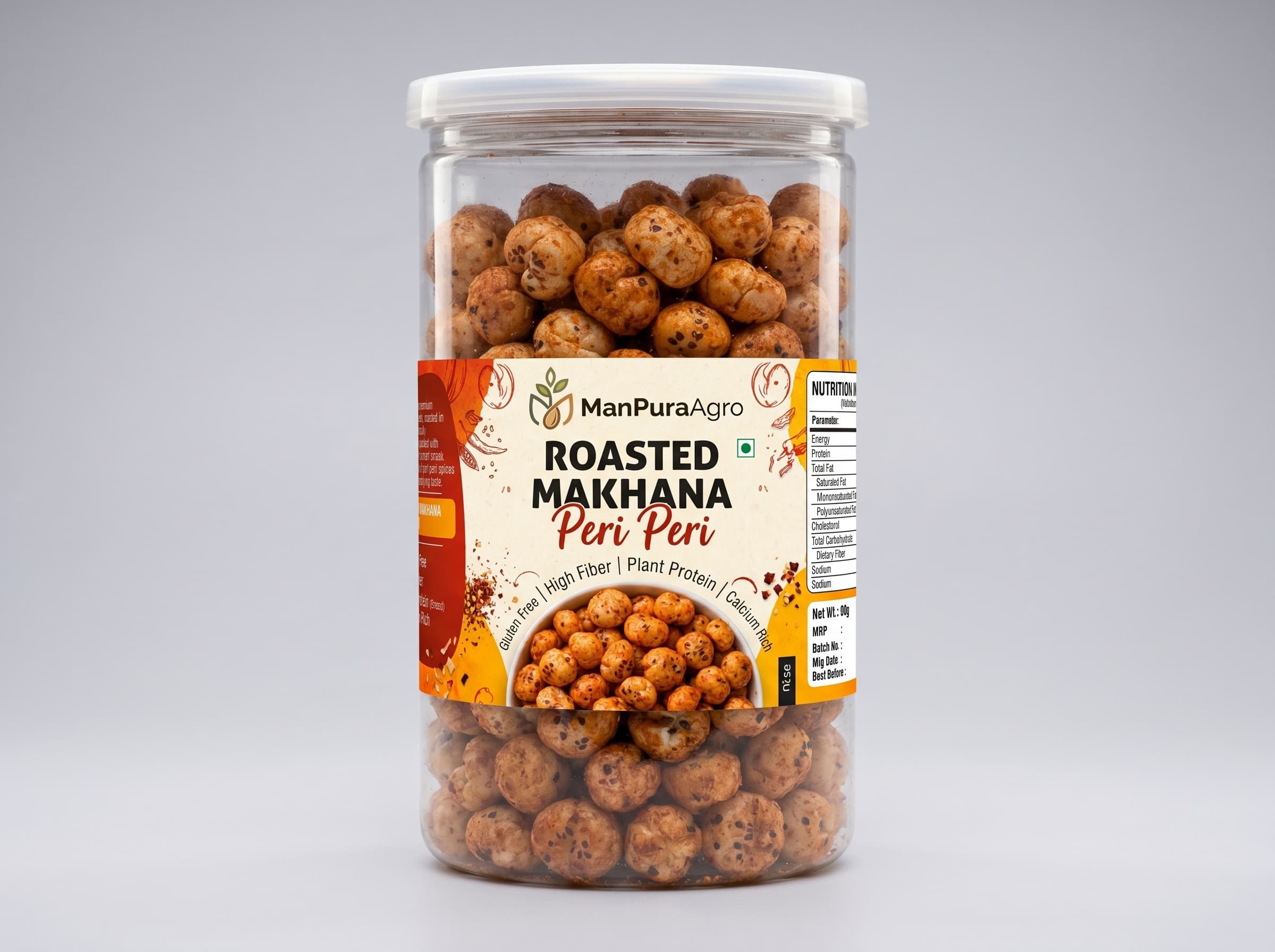 Best Seller
Roasted Makhana - Peri Peri
Peri peri is made from African bird’s eye chillies — drier heat, cleaner finish. We balance it with a touch of garlic and lemon on GI-tagged Bihar makhana, dry-roasted without oil. The burn builds slowly. Good with chai.
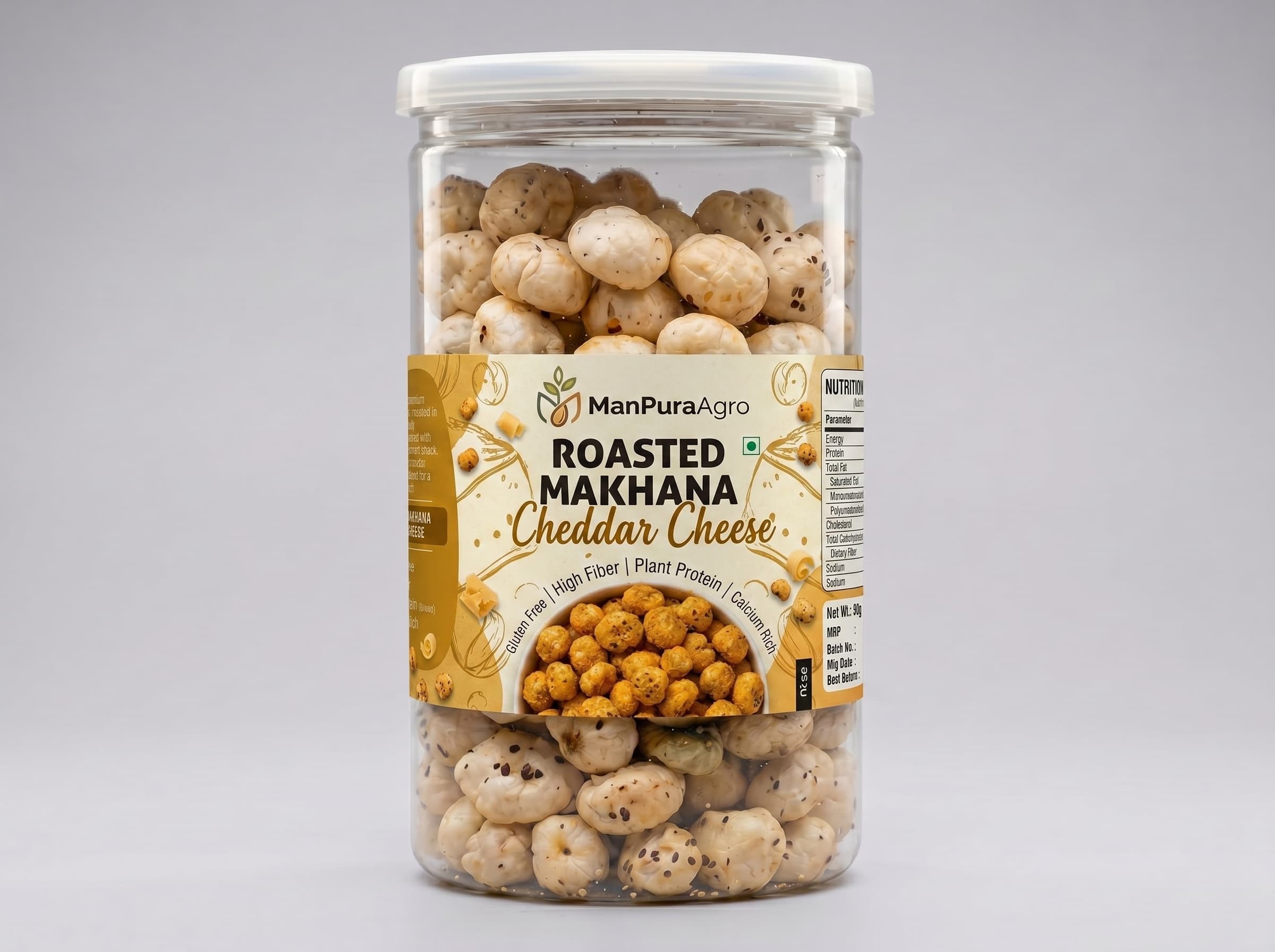 New
NewRoasted Makhana - Cheddar Cheese
Real cheddar powder — not a flavour-identical substitute. Cheddar has a mild sharpness that pairs well with makhana’s neutrality. Dry-roasted makhana from GI-tagged Mithila ponds. Less than 1g fat per 30g serving.
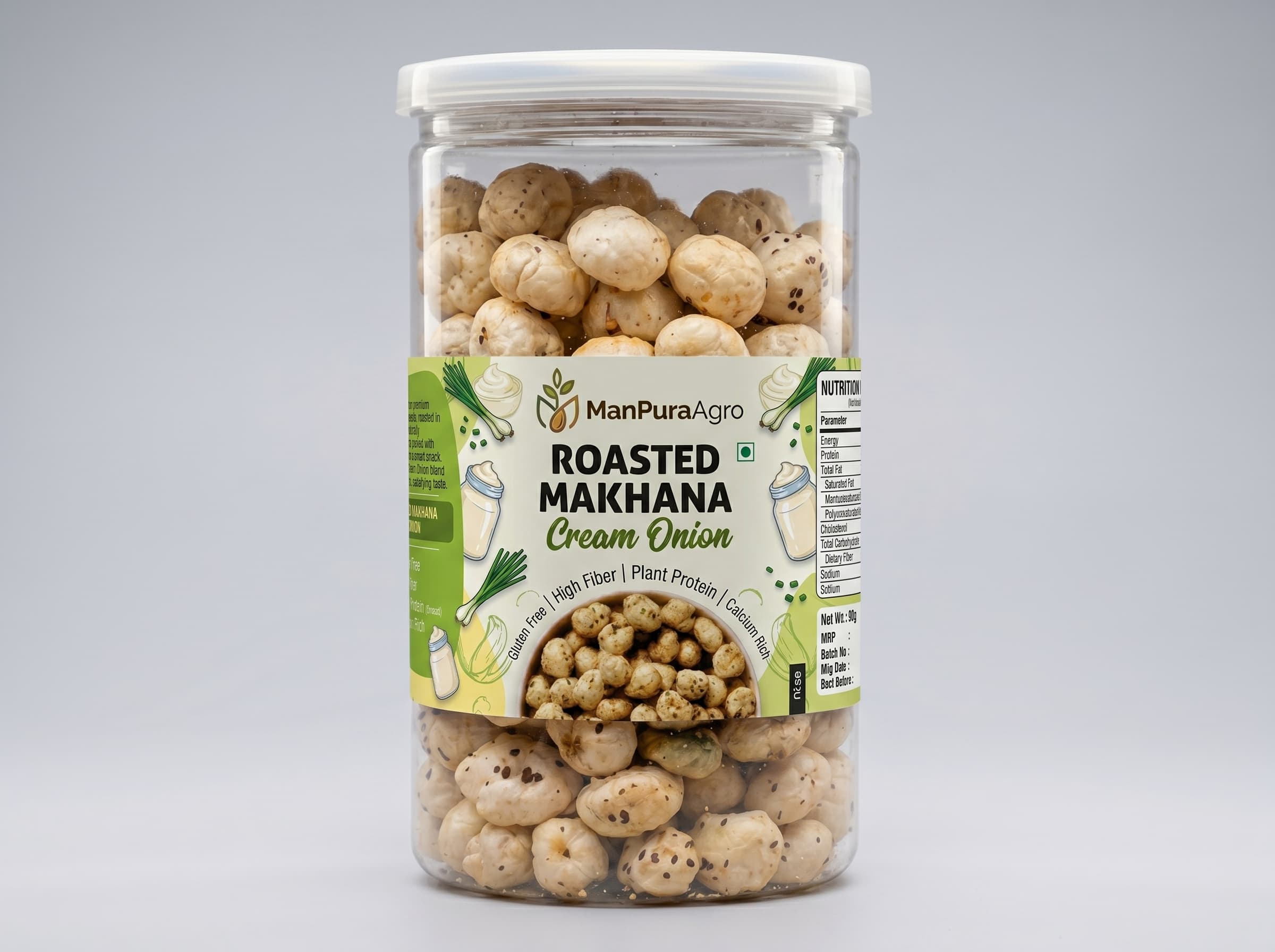 Classic
Roasted Makhana - Cream Onion
Cream and onion is a difficult flavour to get right without going overboard. Ours leans on the onion more than the cream — a savoury, slightly tangy finish on roasted Bihar makhana. No aftertaste.
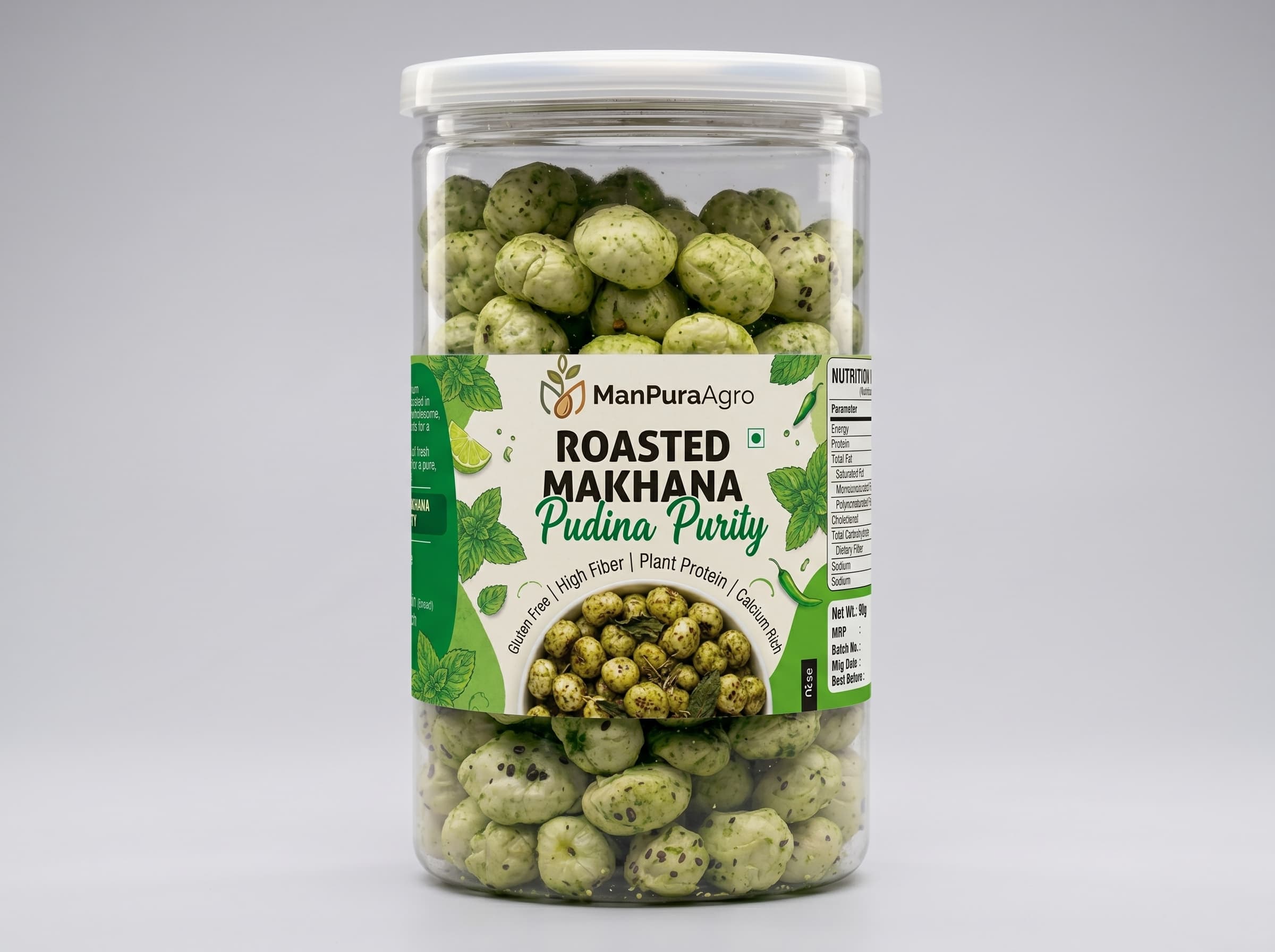 Refreshing
Roasted Makhana - Pudina Purity
The most popular variant in our range. Real pudina (spearmint) with a jeera and kala namak base. A genuinely Indian seasoning on a genuinely Indian crop. Cooling without being sweet.
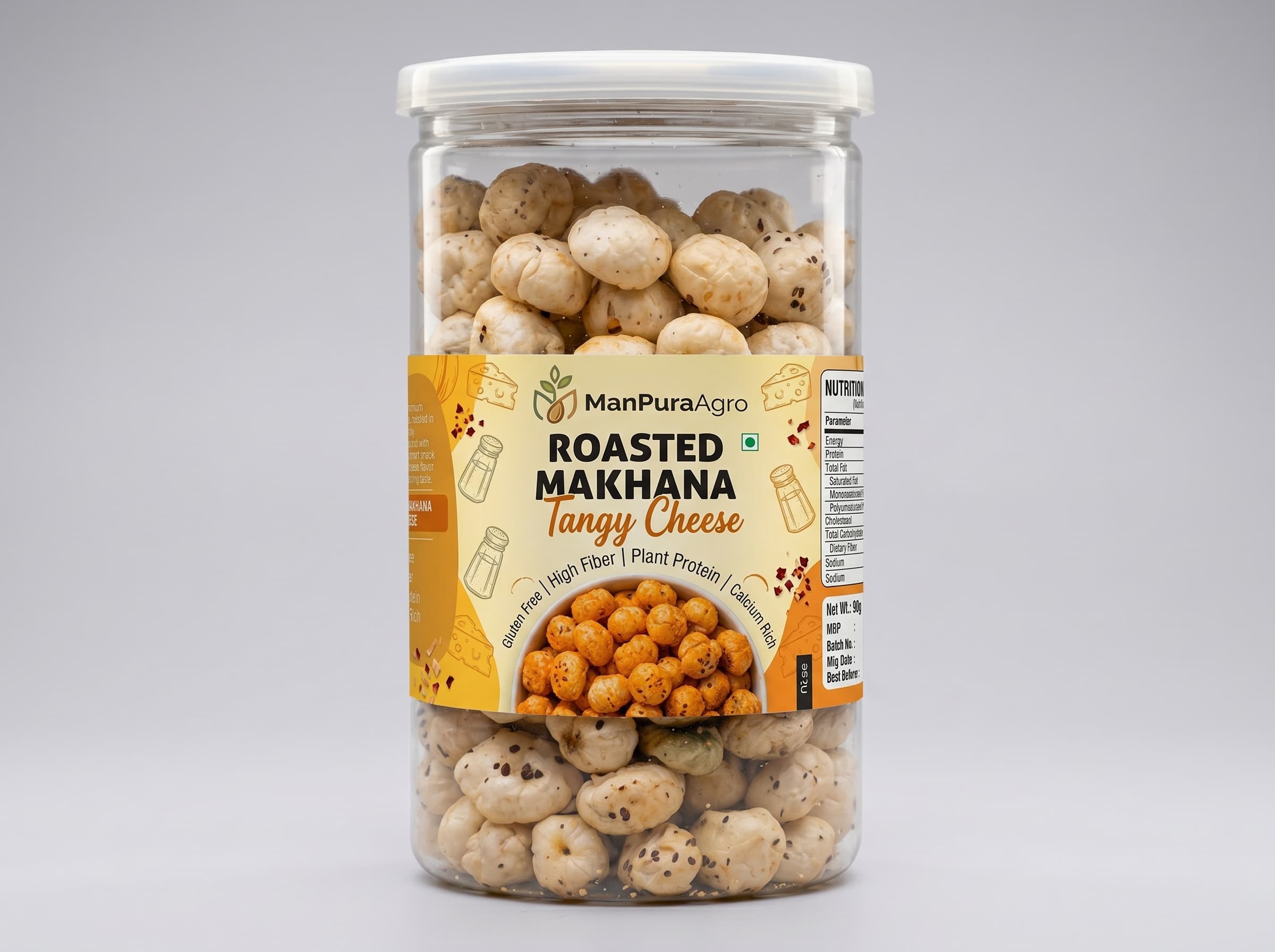 Kids Favorite
Roasted Makhana - Tangy Cheese
A sharper, more acidic cheese seasoning — think chaat masala character but with a cheese base. If you want more punch than plain cheddar but less heat than peri peri, this sits right in between.
Grow something too?
The same care we put into our makhana goes into the organic fertilizers we make. Cow dung compost and goat manure — processed at our Vaishali unit.
See our fertilizers